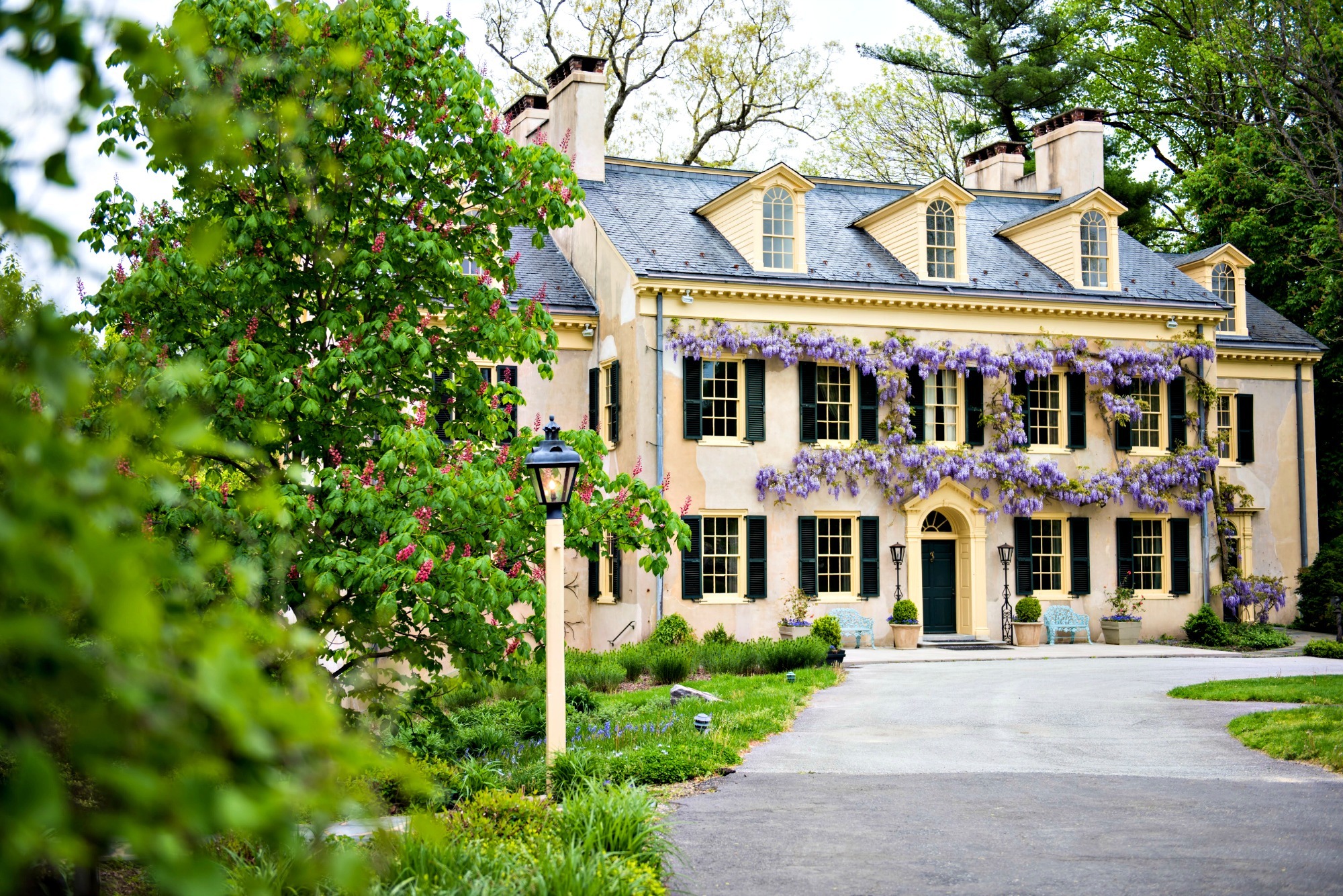
The Hagley Museum and Library in Wilmington, Delaware is one of the most historical and interesting museums on the East Coast. Today, the former industrial site consists of a visitor center/museum, the first du Pont home, a 19th Century black powder operation, and a collection of historic buildings called Workers’ Hill. The museum and grounds cover 235 acres along Brandywine Creek, and a visit allows you to explore each of the areas on a guided or self-guided basis.
Hagley’s library is open to the public and houses a major research collection of manuscripts, archives, photographs, pamphlets, and books documenting the history of American business and technology.
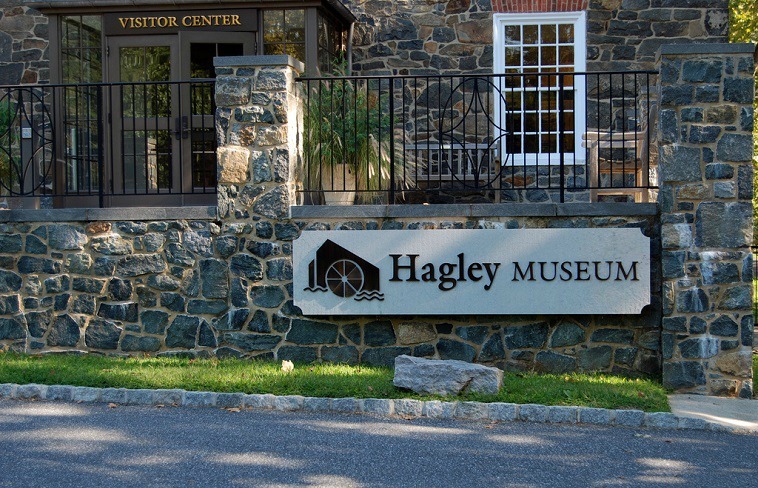
Visitor Center/Museum
The Visitor Center features exhibits and dioramas beginning with the history of the du Pont family and black powder production in the Brandywine Valley in the 19th and 20th centuries— “DuPont: The Explosives Era”. There are also interactive exhibits on the DuPont Company’s history, highlighting inventions and advancements in technologies that have become part of our everyday lives.
The home and gardens are only accessible by shuttle. Shuttles from the Visitor Center to Eleutherian Mills leave on the half hour from 10:30am to 3:30pm.
Eleutherian Mills- The du Pont Family Home & Garden
Step off the shuttle at Eleutherian Mills, the first du Pont family home in the United States. Buses are met by a guide for a tour that lasts approximately 50 minutes. The tour will tell you stories about five generations of the family and their roles managing the black powder industrial site. The 1803 Georgian-style mansion was built by du Pont Company founder E.I. du Pont. The estate also includes the E. I. du Pont Garden, the Barn, and the First Office.
Explore the restored 19th century garden and carriage barn on your own before taking the shuttle back to the Powder Yard or back to the Visitor Center. While on the shuttle, look towards the hill below the mansion, the Renaissance-revival garden was designed by Louise Evalina du Pont Crowninshield in the 1920’s.
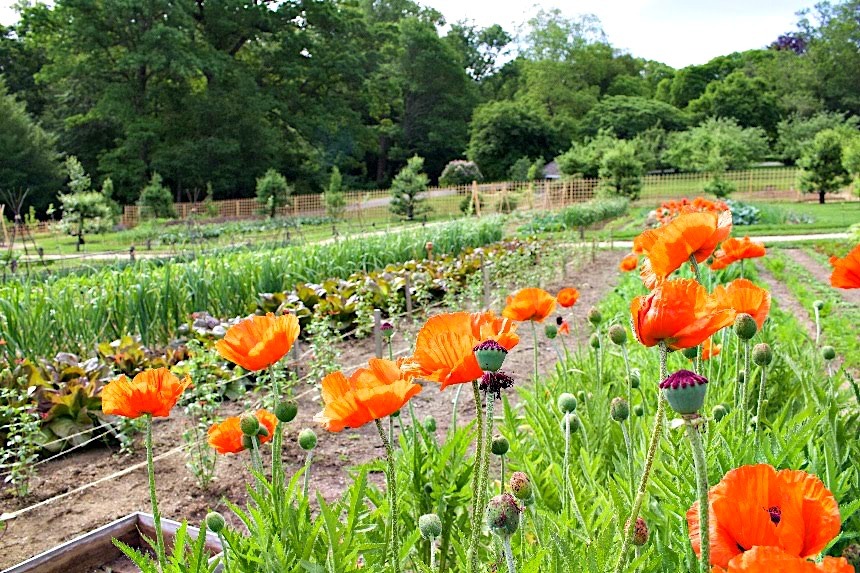 Photo: Courtesy of Hagley Museum & Library
Powder Yards Industrial Site
The gunpowder works was founded by E.I. du Pont in 1802. What you see today is just a portion of the industrial site that produced over 4 million barrels of gunpowder for the American Civil War. The E. I. du Pont de Nemours & Company’s black powder factory was the largest in the world. This is the only place in the United States where you can visit an authentic gun powder production site.
Your self-guided scenic and historic tour through the powder yard will allow you to explore historic stone structures that housed the powder manufacturing process, working nineteenth-century machinery, waterwheels, and turbines powered by the river, line shafts that transferred energy, a sixteen-ton roll mill in operation, a stone quarry that supplied the building material of the yards, black powder explosion demonstrations, a coal-fired steam engine, and of course the beautiful Brandywine River.
 Photo: Courtesy of Hagley Museum & Library
Powder Yard Highlights:
– Watch a demonstration at the Eagle Roll Mill; the energy of the river’s falling water turns two eight-ton iron wheels to mix the ingredients of sulfur, saltpeter, and charcoal. Demonstrations take place throughout the day from 10:30am to 4:30pm. This is the only operating black powder roll mill in the United States
– The 1880s machine shop has been restored and offers a glimpse into the past. Demonstrations take place throughout the day from 10:30am to 4:30pm. The equipment is machine-powered by the Hercules Type A water turbine and a system of belts— a major advancement from hand tooled production.
– “Easy Does It!” An exhibition for younger visitors that provides hands-on opportunities to learn how simple machines make life easier.
– The sixteen-foot high Birkenhead water wheel at the oldest mills in the Hagley yards.
Don’t Miss: The Black Powder Explosion Demonstration. During the operating history of the mill (1802 – 1921) there were 288 explosions. Black powder production and packaging was very dangerous!!
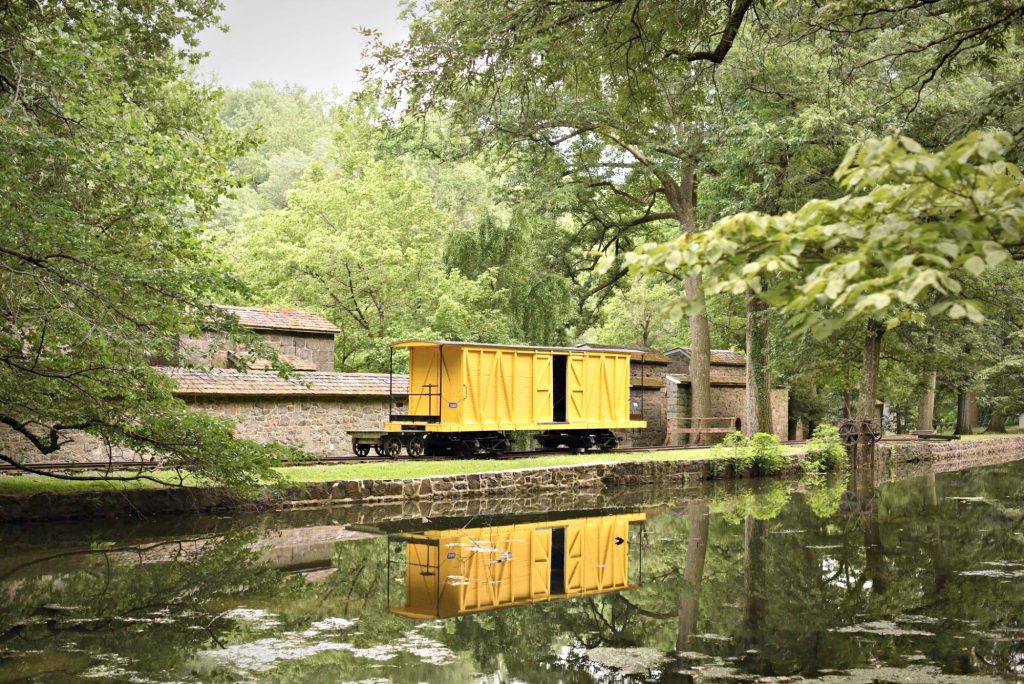 Photo: Courtesy of Hagley Museum & Library
Workers’ Hill
Workers’ Hill is a restored community representative of the ones around the industrial site. During the height of gun powder production, the families living near here were mostly immigrants from Ireland, France, Italy, and England. Visit the Gibbons House to get an idea of the lifestyle of a powder yard foreman’s family. Nearby is the Manufacturers’ Sunday School where Victorine du Pont taught workers’ children on Sundays before public schooling was available. You may see a demonstration highlighting how children were taught at the schoolhouse.
Getting Hungry? The café is located in the Belin House, home of three generations of DuPont Company bookkeepers. Here you can find snacks and lunch.
 Photo: Courtesy of Hagley Museum & Library
Where to Go Next
During your visit, you may have heard or read about a few other du Pont family locations you can visit or other places that were critical to black powder production. The Nemours Estate of Alfred I. du Pont is a 77-room mansion located in Wilmington, DE. Longwood Gardens, located in Kennett Square, PA was founded by Pierre S. du Pont. Stay at one of the grandest hotels on the east coast, the historic Hotel Dupont, located in downtown Wilmington, DE. Mammoth Cave National Park, located in Kentucky, was a source of saltpeter— a major ingredient in black powder production.
Hagley Museum
200 Hagley Creek Road
Wilmington, DE 19807